Most SMEs don’t fail because they lack ambition. They fail because the business runs on fragmented effort: good people working hard, but without a repeatable operating system that turns plans into predictable results.
AI is changing that. Not by replacing your team, but by replacing the invisible friction that slows execution: chasing updates, guessing priorities, losing context, missing early warning signs, and relying on the founder to stitch everything together.
But here’s the part most founders miss: an AI-enabled operating system is not “a bunch of AI tools”. It’s a structured business rhythm powered by visibility, automation, and clear ownership - so execution stays consistent even when the founder is not in the middle.
💡 Key Insight: AI doesn’t create control on its own. Control comes from an operating system with clear priorities, owners, and scorecards. AI simply makes that operating system faster, more visible, and harder to drift.
In this article, you’ll learn what an AI-enabled SME operating system looks like in practice: the components, the workflows, the metrics, and the rhythm that keeps execution on track.
We’ll also show how GrowthOps (strategic clarity and growth architecture) and RhythmOps (the 13-week execution cadence) provide the structure AI needs to deliver predictable performance.
What we mean by an “SME operating system”
An SME operating system is the way your business turns strategy into execution, and execution into results. It includes the routines, standards, and accountability mechanisms that make performance repeatable.
When your operating system is weak, you see familiar symptoms:
Priorities change weekly
Meetings create activity but not progress
Decisions bottleneck at the founder
Performance is inconsistent quarter-to-quarter
Reporting exists, but it’s late and hard to trust
A strong operating system fixes that by creating:
Clarity on what matters now
Rhythm so execution happens weekly
Accountability without micromanagement
Visibility so leaders can steer early
AI enhances these foundations. It does not replace them.
⚠️ Warning: If your operating system is unclear, AI will not magically “fix it”. It will accelerate whatever is already happening - including chaos, poor data, and misaligned priorities.
What makes an operating system “AI-enabled”
An AI-enabled operating system uses automation and intelligence to reduce friction across execution, measurement, and decision-making.
In practical terms, that means AI helps you:
Make performance visible daily, not monthly
Spot risks early (capacity, margin, churn, delivery slip)
Trigger accountability automatically (without chasing)
Standardise workflows so quality is consistent
Capture and reuse knowledge (SOPs, playbooks, decision rules)
Think of it as moving from “leadership by checking” to “leadership by steering”.
📊 Reality Check: In most SMEs, the biggest execution cost is not labour. It’s coordination: time lost in status chasing, rework, unclear ownership, and late reporting. AI targets coordination costs first.
The 7 components of an AI-enabled SME operating system
If you want a clear picture of what “AI-enabled” looks like, start here. The best operating systems share the same building blocks.
📋 The AI-Enabled Operating System Stack
1) Strategic priorities - a clear quarterly focus and decision rules
2) Scorecards - a small set of metrics that run the business
3) Forecasting - forward visibility on demand, capacity, cash, and delivery
4) Automated accountability - prompts, check-ins, and escalation paths
5) Workflow optimisation - standard processes with fewer handoff failures
6) Documentation and playbooks - repeatable standards and decisions
7) CRM-driven insight - customer and pipeline intelligence feeding decisions
Now let’s break each one down and show how AI strengthens it.
1) Strategic priorities that stop drift
Most execution fails because priorities drift. Leaders set goals, then the week-to-week reality takes over: urgent issues, customer requests, staff absences, and random opportunities.
AI doesn’t solve drift. The operating system does.
This is why GrowthOps matters. GrowthOps creates the strategic architecture that makes priorities executable: what matters, why it matters, how it will be measured, and who owns it.
AI enhances this by making the strategy easier to reinforce in daily work:
Summarising priorities into weekly focus prompts
Linking projects to KPIs automatically
Detecting when work is happening off-priority
The goal is not “AI strategy”. The goal is strategy that stays stable long enough to execute.
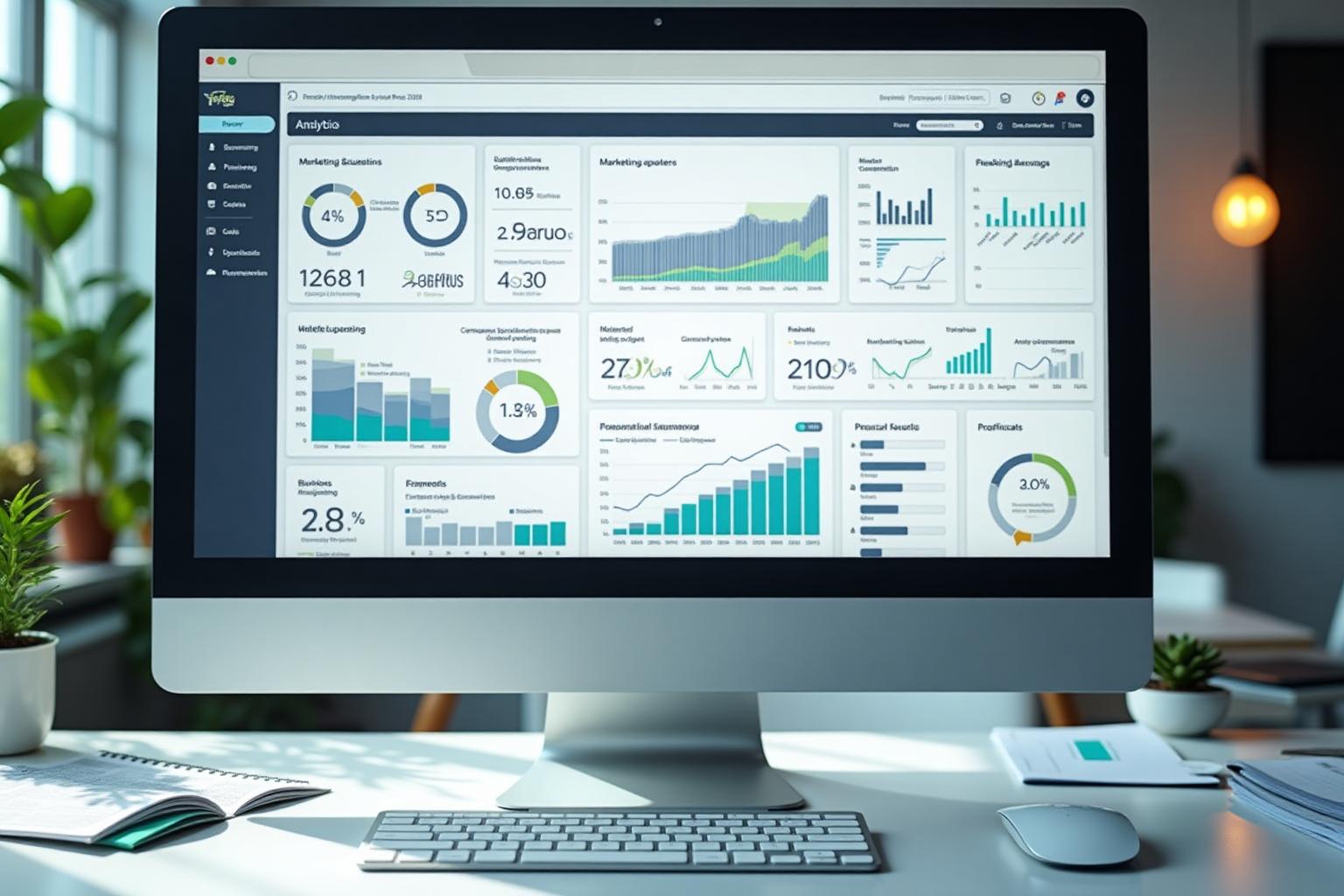
2) Scorecards that make performance visible
If your team cannot see performance, they cannot steer performance.
An AI-enabled scorecard does two jobs:
It reports reality (what’s happening)
It triggers action (what to do next)
The best SMEs keep scorecards simple. You do not need 40 metrics. You need a handful that represent the health of the business.
A typical SME scorecard set includes:
Growth: lead flow, conversion rate, pipeline value, sales cycle time
Delivery: on-time delivery, utilisation/capacity, quality or rework rate
Finance: gross margin, cash runway, debtor days, forecast vs actual
Customer: retention, reviews, NPS or satisfaction signals
AI strengthens scorecards by:
Reducing manual reporting effort (auto-aggregation and summaries)
Highlighting anomalies (what changed, where, and why)
Turning dashboards into briefings (so leaders actually use them)
3) Forecasting that prevents “surprise chaos”
Many SMEs don’t have a forecasting problem. They have a visibility problem.
They discover issues when it’s too late: capacity overload, delivery slip, margin erosion, cash pressure. Then the founder jumps in and firefights.
AI-enabled forecasting helps you see around corners:
Demand forecasting: expected work volume based on pipeline and seasonality
Capacity forecasting: whether the team can deliver without breaking
Cash forecasting: the likely cash position if nothing changes
Delivery forecasting: early warning signs on project delay risk
📝 Example: Instead of discovering in week three that delivery is overloaded, an AI-enabled system flags in week one that pipeline wins will exceed capacity unless you adjust pricing, timelines, or resourcing.
Forecasting is where founders gain real freedom. If you can see risk early, you can fix it calmly. That reduces the need for founder rescue.
4) Automated accountability that replaces chasing
In most SMEs, accountability is manual. Someone has to chase: “Did you do it?” “Where are we at?” “Can you send the update?”
This creates two problems:
Leaders spend time on coordination instead of direction
Teams learn to wait for prompts instead of owning outcomes
This is why RhythmOps is so powerful. RhythmOps installs a repeatable cadence where progress is reviewed weekly against a clear quarterly focus.
AI strengthens RhythmOps by automating the accountability layer:
Automated check-ins for owners (“What moved this week?” “What’s blocked?”)
Prompting teams to update scoreboards on set days
Escalation rules when metrics fall below thresholds
Summary briefs for leaders before weekly reviews
👉 Step: How automated accountability works in practice
Define owners: every KPI and initiative has a named owner
Define update moments: set days for updates and reviews
Define prompts: AI-driven messages gather progress and blockers
Define escalation: when a metric drops, the system flags it early
The point is not “more automation”. The point is consistent follow-through without founder chasing.
5) Workflow optimisation that reduces rework
Most SMEs don’t lose time because people are slow. They lose time because work gets stuck in handoffs: unclear briefs, missing information, inconsistent quality, and last-minute surprises.
AI-enabled workflow optimisation focuses on repeatability:
Standard inputs: briefs, forms, and requirements captured consistently
Stage gates: work moves through defined stages, not improvisation
Quality checks: checklists and standards prevent preventable mistakes
Exception detection: early alerts when work deviates from normal patterns
AI helps by summarising context, suggesting next steps, and spotting anomalies. But again, the system design comes first.
6) Documentation and playbooks that keep standards consistent
Founder-led SMEs often rely on tribal knowledge: “Ask Sarah, she knows.” “John always handles that.” “We’ve just always done it this way.”
That works until it doesn’t. It breaks when you hire, scale, or step away.
An AI-enabled documentation system does not mean writing a 200-page manual. It means creating living playbooks:
SOPs for critical processes (sales handoff, onboarding, delivery, invoicing)
Decision rules (pricing exceptions, scope changes, escalation thresholds)
Templates and checklists (briefs, reports, QA steps)
AI helps create and maintain these playbooks faster:
Drafting SOPs from existing notes and workflows
Summarising “what changed” after a process update
Surfacing relevant SOP sections at the moment of work
💡 Pro Tip: Don’t document everything. Document the 10% of processes that create 90% of outcomes: lead handling, quoting, delivery, quality control, invoicing, and customer retention.
7) CRM-driven insight that improves decisions
In most SMEs, the CRM is underused. It becomes a contact list, not a decision system.
In an AI-enabled operating system, the CRM becomes a source of truth for customer and pipeline insight:
Lead quality trends (which sources convert, which don’t)
Pipeline velocity (where deals stall)
Follow-up performance (response time, drop-off points)
Retention and reactivation signals (who is drifting, who is ready to buy again)
AI strengthens this by turning raw CRM activity into decisions:
Summaries of pipeline health and risks
Prioritised daily actions for sales and account owners
Automated follow-up and reactivation workflows
Alerts when key accounts show churn risk behaviours
How GrowthOps and RhythmOps make AI operational
Many SMEs experiment with AI and see mixed results. The usual reason is simple: AI is being used without an operating model.
GrowthOps provides the architecture: priorities, KPIs, system ownership, and the growth plan that aligns marketing, sales, and operations.
RhythmOps provides the cadence: a 13-week cycle that locks focus, embeds weekly execution, and creates accountability without founder micromanagement.
AI then sits on top as an accelerator:
Faster reporting and clearer visibility
Automated check-ins and accountability prompts
Early warning forecasting and anomaly detection
Standardised playbooks and workflow reinforcement
This is how you move from chaotic effort to predictable performance.
Ready to build an AI-enabled operating system? If you want a practical roadmap for scorecards, accountability, and AI-driven execution rhythm, Book a FREE Strategy Session.
A practical implementation roadmap
You don’t implement an AI-enabled operating system by rolling out 12 tools. You implement it by installing structure, then using AI to remove friction inside that structure.
☑️ 30–60–90 Day Install Plan
Days 1–30: Define quarterly priorities, owners, and a simple scorecard
Days 31–60: Install weekly rhythm, automated check-ins, and reporting summaries
Days 61–90: Add forecasting, workflow standards, and playbooks for the highest-impact processes
Days 1–30: Clarity and scorecards
Start with strategic clarity and measurement. Choose one quarterly focus that matters (your Power of 1), define 5–10 core metrics, and name owners. Without ownership, metrics are just numbers.
Days 31–60: Rhythm and automated accountability
Install a weekly cadence so the business reviews progress consistently. Then add automated prompts that gather updates and blockers before meetings. This is where the founder gets time back quickly.
Days 61–90: Forecasting and workflow reinforcement
Once execution is stable, add forecasting and workflow optimisation. Choose the processes that create the most rework or escalation, and standardise them with checklists and playbooks supported by AI summaries and prompts.
What success looks like
When an AI-enabled operating system is working, you feel it:
Fewer surprises and less firefighting
Faster decisions because performance is visible
Clearer ownership and fewer bottlenecks
Consistent weekly progress toward quarterly outcomes
Reduced founder dependency because the system runs the business
✅ Success Indicator: You can step away for a week and the business still executes against priorities because ownership, rhythm, and scorecards keep everything moving.
AI is not the operating system. It is the performance engine inside the operating system. The real win is building a business that runs on clarity, rhythm, and accountability - then letting AI remove friction so it compounds faster.
Want to see what this looks like in your business? Book a FREE Strategy Session and we’ll map the operating system you need, then show where AI creates the fastest performance lift. Book a FREE Strategy Session.
Frequently Asked Questions
What is an AI-enabled operating system?
An AI-enabled operating system is a structured way of running an SME where priorities, scorecards, accountability, workflows, and documentation are reinforced by AI through automation, forecasting, and real-time insight.
How does AI help execution?
AI helps execution by making performance visible, triggering automated check-ins, surfacing blockers early, improving forecasting, and reducing coordination work so teams can focus on outcomes rather than chasing updates.
What tools support SME operations?
The most effective tools are those that centralise data and execution: a CRM as a source of truth, dashboards for scorecards, automation for follow-up and accountability prompts, and workflow systems supported by playbooks and checklists.