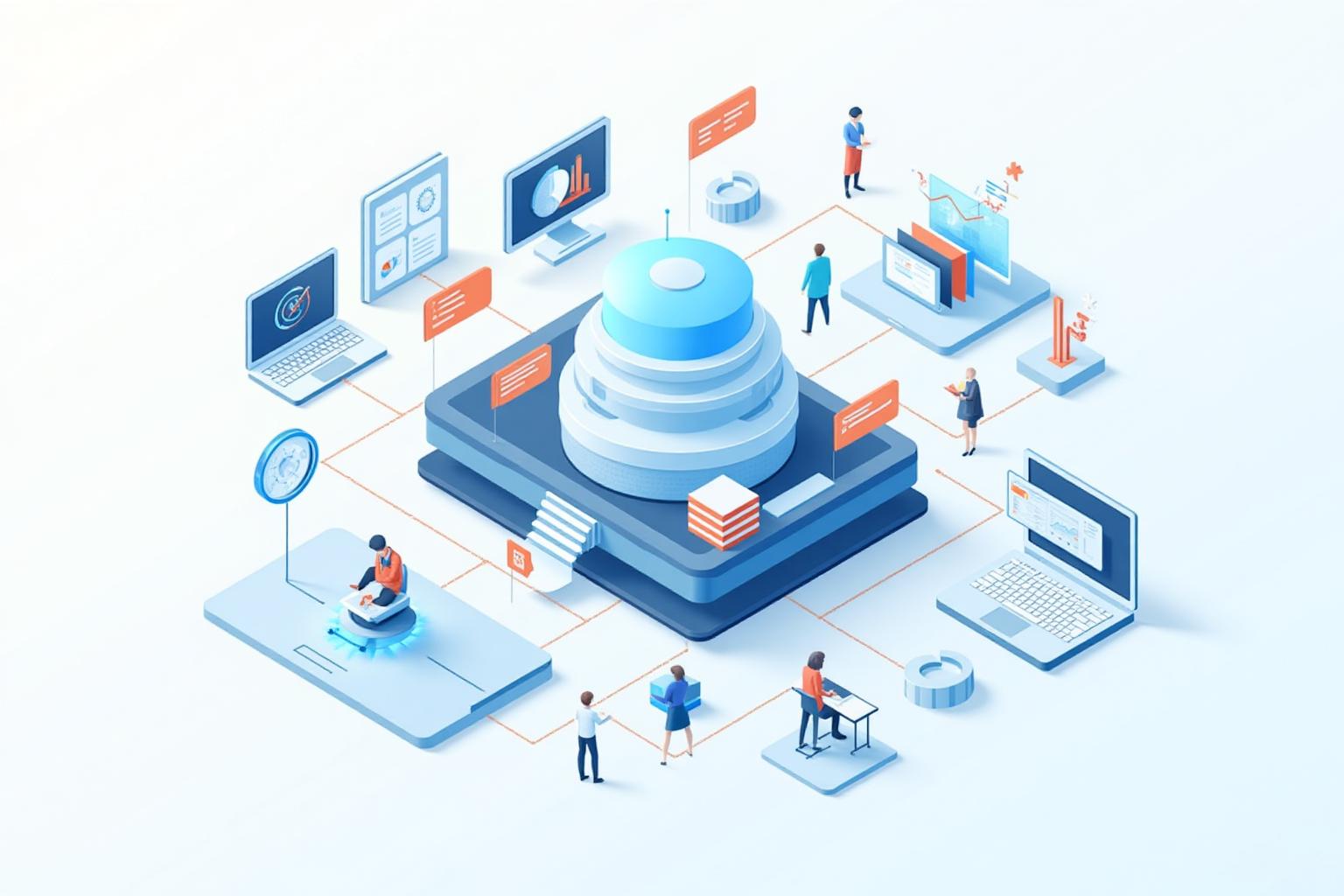
AI Adoption Is Accelerating – But Most SMEs Are Not Ready
Across the UK, the rise of AI adoption in small and medium-sized enterprises has moved from curiosity to necessity. TechRadar recently reported that more SMEs are experimenting with AI to streamline operations, enhance customer interactions, and reduce manual workload. But alongside this enthusiasm sits a growing problem: most SMEs are jumping into AI without the systems, clarity, or operational rhythm needed to make it work.
For founder-led businesses - already battling firefighting, inconsistent performance, and fragmented tech stacks - the sudden arrival of AI can be overwhelming. Every vendor claims to be a silver bullet. Every tool looks promising. Every demo feels urgent. But without foundations in place, the result is predictable: half-finished initiatives, confused teams, and technology that increases complexity rather than reducing it.
💡 Key Insight: AI is not a transformation strategy. It is an execution accelerant. Whatever system you already have in your business – clarity or chaos – AI simply makes it happen faster.
This is why the winners in the next wave of UK SME growth will not be those with the most tools. It will be the companies who build the right operating system first – the structure, rhythm, and accountability needed to use AI consistently and safely. This article gives you a practical road-map to do exactly that.
Why AI Adoption Should Be a Priority for UK SMEs
Two shifts have collided to create the perfect moment for SMEs to adopt AI:
AI tools have become dramatically more powerful – generative AI, automation, AI call assistants, sentiment analysis and predictive analytics are now accessible through simple SaaS platforms.
The cost of inefficiency has risen sharply – labour shortages, rising salary expectations, customer impatience, and the pressure to deliver consistent value are pushing SMEs to automate faster.
📊 The Trend: UK adoption surveys show that 2024–2025 saw the fastest-ever rise of AI implementation in SMEs, with over 60 percent now testing or using AI in at least one operational area.
But this acceleration exposes a hidden divide: SMEs with robust internal systems benefit immediately; SMEs without systems simply drown quicker. AI multiplies operational gaps when installed into weak processes.
The Real Challenge: AI Creates Faster Firefighting Without Structure
Most SME leaders imagine AI will simplify their business. In reality, AI increases complexity unless there is a framework guiding how it is deployed. We see three patterns in businesses adopting AI without structure:
Teams test tools independently, creating tech sprawl and inconsistent workflows.
No one takes ownership of implementation, so tools are abandoned within weeks.
Data becomes fragmented across multiple systems, reducing visibility instead of improving it.
❌ Critical Mistake: Automating a broken process.
AI accelerates the failure. Before automating anything, confirm the underlying workflow is correct.
This is why every AI project must start with one fundamental question: What business outcome must this tool support? Without that clarity, AI becomes just another distraction.
Introducing the GTi AI Adoption Roadmap
GTi’s GrowthOps and RhythmOps operating systems provide a reliable structure for implementing AI safely and with compounding impact. The roadmap combines strategic alignment with practical deployment to avoid the typical SME pitfalls.
📋 The 4-Stage AI Adoption Framework
Stage 1 – Audit: Assess processes, skills, data quality, and bottlenecks before choosing any tools.
Stage 2 – Align: Link each AI tool to your quarterly strategic priorities, KPIs, and rhythms.
Stage 3 – Automate: Implement low-risk, high-impact automations and build confidence across your team.
Stage 4 – Accelerate: Expand AI across operations, marketing, sales, and decision-making once foundations are stable.
This framework mirrors the GTi Method: Engineer → Install → Execute → Review → Compound. It is deliberate, paced, and designed for SMEs who want predictable, sustainable growth - not technological chaos.
Stage 1: Audit – Build the Foundation Before Touching AI
Too many businesses skip the audit stage and jump straight into tools. This is where cost overruns and failed implementations are born. A proper audit exposes the real opportunities and prevents expensive wrong turns.
Step 1: Run a Workflow Bottleneck Audit
Look for repetitive manual work, inconsistent task ownership, long handovers, and recurring errors. These are prime candidates for AI optimisation.
👉 Step: List your 10 highest-friction processes.
Identify where delays occur, where tasks get missed, and where the business depends too heavily on a single individual.
Step 2: Assess Data Readiness
AI depends on clean, accessible data. If your CRM is outdated or your customer data sits across spreadsheets, emails, and shared drives, fix this before automating anything.
⚠ Warning: Dirty data produces unreliable AI outputs.
Poor data leads to incorrect insights, embarrassing customer interactions, and bad decision-making.
Step 3: Evaluate Team Capability and Skills
Your team does not need to be AI experts – but they do need basic digital confidence. Identify training gaps early.
Step 4: Audit Your Tools and Tech Stack
Many SMEs already own features they do not use. CRM systems, automation tools, and marketing platforms often have AI capabilities built in but unconfigured.
📝 Example: Hidden ROI in Your Existing Tools
A GTi client in professional services discovered that their CRM already had AI-assisted pipeline management. Enabling it saved 6 hours/week across the sales team.
Stage 2: Align – Build AI Into Your Quarterly Rhythm
AI implementation without rhythm leads to abandoned tools and half-finished initiatives. RhythmOps creates the cadence required to turn AI from a project into a system.
Step 1: Use the 13-Week Rhythm to Prioritise AI
Every quarter, your leadership team should define:
The AI initiatives that support the Power of 1
The KPIs the AI will influence
The weekly actions required for adoption
💡 Pro Tip: Never add more than three AI initiatives to a quarter. Capacity beats ambition every time.
Step 2: Create Ownership and Accountability
Assign a single owner to each AI initiative. Not IT ownership - operational ownership. This ensures adoption, testing, and feedback loops remain tight.
Step 3: Use the Control Room for Weekly AI Check-Ins
Integrate AI performance metrics into your scoreboard. Weekly visibility drives momentum and ensures early issues are caught before they become expensive.
Stage 3: Automate – Deploy High-Value, Low-Risk AI First
The biggest wins for SMEs come from AI that removes repetitive admin, accelerates communication, and increases consistency. These are the easiest areas to automate safely:
1. Lead Capture and Follow-Up
AI call assistants, automated follow-ups, and CRM-driven engagement protect revenue and reduce lost opportunities.
✅ SME Win: One client recovered 27 percent of previously lost leads with automated follow-ups inside their AI CRM.
2. Reputation Management
AI can request, collect, and respond to reviews with consistent quality – critical for local businesses and service providers.
3. Workflow Automation
Onboarding sequences
Invoice reminders
Client check-ins
Meeting preparation
⚡ Important: Start with processes that already work. Do not automate what you have not standardised.
4. Content and Marketing Execution
With a strong editorial system (like your Learning Centre), AI can accelerate high-quality content production, repurposing, and distribution.
5. Customer Experience Enhancements
AI chat tools and customer success assistants free your team to focus on higher-value interactions.
Stage 4: Accelerate – Scale AI Across Operations Once Foundations Are Stable
When your business has a stable operating rhythm and your first automations are delivering ROI, you can expand into more advanced AI initiatives.
1. AI-Assisted Decision-Making
AI can surface insights that help you make better decisions about pricing, hiring, capacity planning, and customer segmentation.
2. Predictive Analytics
These models help forecast demand, identify risk, and optimise resource allocation.
3. AI-Supported Sales Enablement
Proposal writing, call analysis, lead scoring, and pipeline forecasting become more accurate.
4. Advanced Customer Insights
AI can identify recurring themes across support tickets, reviews, and conversations that would take a human months to analyse.
ℹ Tip: You do not need enterprise-level tools to use advanced AI. Many SME-friendly platforms offer these features out of the box.
How SMEs Should Choose the Right AI Tools
The AI market is saturated. Tools look similar, but their effectiveness varies dramatically. Use this structured approach to evaluate tools:
☑ AI Tool Vetting Checklist
Does it integrate with your existing CRM or tech stack?
Does it reduce manual workload immediately?
Does it support your quarterly priorities?
Does it require minimal training for adoption?
Does it produce measurable output in under six weeks?
How to Measure AI ROI in Your SME
AI ROI must be visible within the quarter – ideally within the first six to eight weeks. Common ROI signals include:
Reduced manual hours
Increased lead conversion
Reduced task errors
Faster delivery cycles
Improved customer satisfaction
✅ Success Indicator: If your AI deployment is correct, you will see measurable time savings, performance improvements, or revenue increases by Week 6.
If you do not see improvement, the problem is usually either process instability or poor adoption – not the AI tool itself.
Common Pitfalls That Derail SME AI Adoption
❌ Mistake #1: Skipping the audit.
Poor foundations lead to AI failure.
❌ Mistake #2: Letting each department choose its own tools.
This creates fragmentation and chaos.
❌ Mistake #3: No change management.
Team resistance is the biggest barrier to AI adoption.
What AI-Enabled Success Looks Like
When AI is deployed using a structured, quarterly rhythm, SMEs experience a measurable and compounding transformation:
20–35 percent reduction in manual admin
More consistent lead follow-up and higher conversions
Faster customer response times
Improved profitability through efficiency gains
Leadership freedom through operational independence
💬 Client Perspective
"AI did not replace our team. It amplified them. With the right structure, we delivered more in three months than the previous year." – UK SME Owner
FAQs
How do I know which AI tools are right for my business?
Start with an audit. Identify repetitive tasks, bottlenecks, and inconsistent processes. Select tools that support your quarterly goals directly.
How quickly should I see results?
Most SMEs see measurable improvements within six to twelve weeks when AI is deployed within a structured operating rhythm.
Do I need an AI expert?
Not initially. You need strong systems, clarity, and execution rhythm. Once those foundations exist, AI specialists add value much more efficiently.
Ready to Implement AI Safely and Strategically?
If you want to adopt AI without creating chaos, GTi helps SMEs install the systems that make AI work. From GrowthOps clarity to RhythmOps execution, we help your business create measurable, compounding value every quarter.
ℹ Next Steps
Book a free 45-minute AI Adoption Assessment to uncover the highest-impact AI opportunities in your business.
Explore related systems: