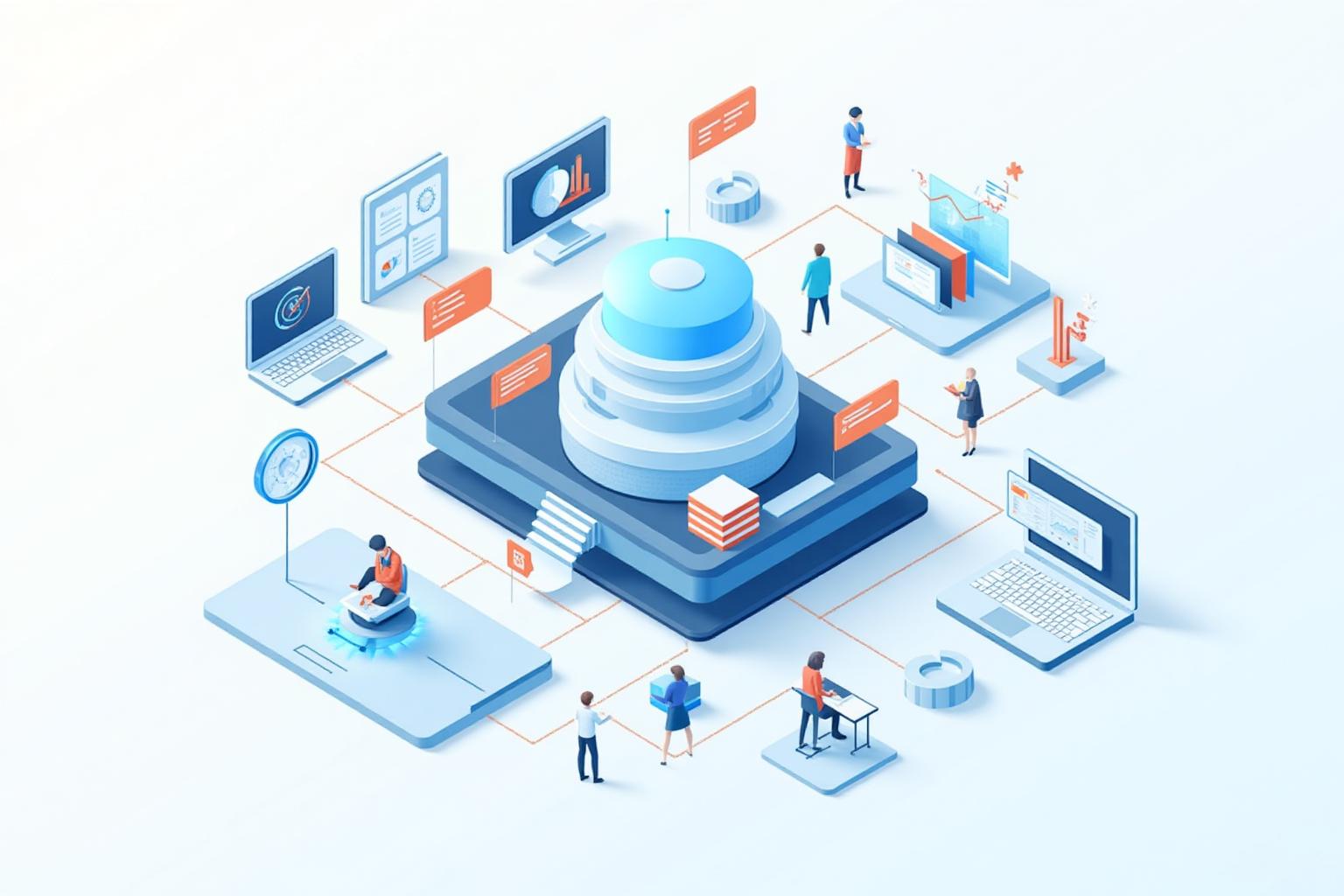
Most small businesses and medium businesses hit a ceiling at around £1 million in revenue. Not because small business owners lack ambition or skills, but because the organisation is still powered by manual tasks, inefficient processes, and human effort that simply cannot scale. What worked at £300k or £500k breaks under the pressure of £1M–£2M.
The jump from £1M to £5M+ requires a transition from founder-driven hustle to system-driven performance. And that transition starts with SME automation - using automation tools and workflow automation to streamline everyday tasks, automate repetitive tasks, and reduce human error across business operations.
What do we mean by automation?
In the SME context, automation refers to:
Business process automation (BPA) that removes manual effort
Workflow automation that connects different apps and systems
Customer relationship management (CRM) automation
Automated workflows that save time and eliminate repetitive tasks
Low-code automation platforms like Zapier and Power Automate
Simple processes that run 24/7 with no technical expertise required
This is very different from the robotic process automation (RPA) or advanced artificial intelligence used by large enterprises. For small businesses, automation is about reliable, day-to-day operational support, not complexity.
These automation ideas lay the foundation for scalable automation, helping SMEs cut costs, reduce errors, improve efficiency, and streamline processes as the business grows.
Why Automation Matters More After £1M Revenue
Getting to £1M typically relies on personal relationships, follow-up emails, hustle, and founders doing “whatever it takes.” But scaling beyond that point requires stronger business processes and a deliberate automation strategy.
Without automation, growth inevitably leads to:
More staff hired just to manage repetitive tasks
Longer response times as volume increases
Manual tasks slipping through the cracks
Higher customer acquisition cost due to inefficiency
Founders stuck in daily operations instead of strategic leadership
Disconnected tools and separate systems that create chaos
Trying to scale with only human interaction and manual effort is expensive, slow, and error-prone. Automation ensures fewer errors, increased productivity, and greater efficiency, without increasing headcount.
What SME Automation Actually Achieves
When implemented correctly, small business automation helps an organisation:
Streamline workflows and automate repetitive tasks
Reduce human error and improve customer experience
Improve efficiency across sales, service, admin, and cash flow
Build reliable audit trails and cleaner customer data
Achieve greater job satisfaction by eliminating boring tasks
Cut costs by removing inefficient processes
Save time for strategic projects that drive growth
Create automated workflows that scale effortlessly
Many SMEs begin with simple automation tools such as Zapier, HubSpot, Zoho CRM, or Power Automate, which allow non-technical users to create automated workflows using built-in templates or low-code actions.
Common SME Automation Mistakes
Small businesses often delay automation because they believe:
“We need new software first.” (Usually false.)
“Automation is expensive.” (Most tools are £20–£50/month.)
“Our processes are too unique.” (Almost all can be automated.)
“You need technical expertise to build automations.” (Not anymore.)
The real blocker is simply not having an automation strategy.
Warning:Trying to scale without automation is like trying to drive faster by pushing the car yourself. You'll burn out before you make real progress. Most businesses plateau at £1M-£2M simply because manual processes can't keep up with increased demand.
The good news? The five automations below create compounding efficiency. Each one removes friction, speeds up revenue generation, and frees your team to focus on high-value work.
The 5 Essential Automations
These are the highest-ROI automations for SMEs ready to scale beyond £1M.
1. Lead Capture Automation
What It Does
Captures leads instantly from your website, social media, ads, and landing pages — then routes customer data into your CRM automatically.
Why It Matters
Manual data entry creates delays, errors, and lost opportunities. Automated workflows remove friction and reduce customer acquisition cost.
Key Insight: Businesses with automated lead capture respond to enquiries 10x faster than those relying on manual data entry. Speed-to-response is one of the strongest predictors of conversion - often more important than price or offering.
What It Includes
Web form integration
Chatbot capture
Lead source tagging
Data validation
Instant alerts to sales teams
Automated nurturing sequences
This is one of the easiest process automation wins for SMEs.
2. Follow-Up Automation
What It Does
Automatically sends follow-up emails, SMS messages, or DMs based on customer behaviour.
Why It’s Essential
Most customers don’t convert on the first contact. Automation ensures consistent follow-up 100% of the time.
Success Tip:Set up a 7-day follow-up sequence for new leads that includes email, SMS, and (if appropriate) direct mail. Companies that contact leads within 5 minutes are 9x more likely to convert them - but automated follow-up keeps working even when your team is busy.
What It Includes
Email sequencing
SMS for high-intent leads
Behaviour-based triggers
Automatic assignment to sales
Reduced human error
Follow-up automation alone can double conversions.
3. Booking & Scheduling Automation
What It Does
Let's prospects book straight into your calendar - no email ping-pong.
Why It Matters
Every friction point reduces conversion. Workflow automation simplifies daily operations and improves customer satisfaction.
Pro Tip:Include your booking link in email signatures, social media bios, and follow-up sequences. Make it as easy as possible for prospects to get time with you - then let the automation handle the logistics.
What It Includes
Calendar sync
Automated reminders
No-show reduction
Reschedule links
Buffer time settings
For service businesses, this is a must-have automation feature.
4. Review Generation Automation
What it does
Automatically requests reviews from happy customers at the optimal moment - right after a successful delivery, positive interaction, or milestone.
Why it's essential
Reviews are the most powerful form of social proof, but manually asking for them is awkward and inconsistent. Automation makes it systematic and scalable.
The Review Automation Framework
Step 1:Identify the "magic moment" when customers are happiest (delivery, onboarding complete, positive feedback received)
Step 2: Trigger an automated email or SMS asking for a review, with direct links to Google, Trustpilot, or your platform of choice
Step 3: Send a thank-you message to reviewers (builds loyalty)
Step 4: Route negative feedback privately to your team (damage control before it goes public)
Step 5: Monitor review volume and sentiment over time (automate reporting too)
What it includes:
Trigger-based review requests (timing is everything)
Multi-channel outreach (email, SMS, in-app)
Review funnel optimisation (make it easy with direct links)
Sentiment monitoring (catch problems early)
5. Customer Reactivation Automation
What it does
Re-engages past customers who haven't purchased in a while, win-back campaigns for lapsed clients, and upsell/cross-sell messaging based on purchase history.
Why it's essential
Acquiring new customers costs 5-7x more than reactivating existing ones. Your customer database is a goldmine - but only if you nurture it. Reactivation campaigns often produce 10–20% incremental revenue with almost zero cost.
Key Insight: Most businesses spend 90% of their marketing budget on new customers and ignore the existing ones sitting in their database. Reactivation automation flips that - targeting the warmest audience first, with the highest ROI.
What It Includes
Segmentation by recency & frequency
Personalised win-back offers
Automated sequences for 30/90/180-day lapse
Upsell/cross-sell triggers
This is one of the most profitable automation strategies available.
Additional Automation Ideas for Scaling SMEs
Once the core five are installed, consider:
Expense tracking automation
Recurring invoices
Payroll processing workflows
Automated customer communications
Internal workflow automation using Power Automate
Automating onboarding processes for new users or new customers
Slack/Microsoft Teams notifications for critical events
These are easy to implement and deliver immediate ROI.
How These Automations Work Together
When combined, these automations create a complete business growth engine:
Lead Capture brings prospects into your system instantly
Follow-Up Automation nurtures them until they're ready to talk
Booking Automation gets them into your calendar without friction
Review Automation turns happy customers into advocates
Reactivation Automation brings past customers back for more
Together, they create a self-sustaining growth loop that compounds over time. This is the heart of modern digital transformation for SMEs.
Real-World Impact: One UK-based consultancy installed these five automations and saw a 43% increase in qualified leads, 67% faster response times, and a 31% increase in customer lifetime value - all within 6 months, without adding headcount.
Implementation: Where to Start
Don't try to implement all five at once. Start with the automation that will have the biggest immediate impact on your business:
High lead volume? Start with Lead Capture + Follow-Up
Struggling to convert enquiries? Start with Booking Automation
Need more social proof? Start with Review Generation
Strong customer base but poor retention? Start with Reactivation
Common Mistakes
Many businesses try to build these automations piecemeal using disconnected tools (one for email, another for SMS, another for booking). This creates data silos and breaks the customer experience. Use an integrated platform or ensure all tools sync properly.
What to Expect
These automations typically deliver measurable results within 30-60 days:
Lead response time: Drops from hours to minutes
Follow-up consistency: Goes from 20-30% to 100%
Booking conversion: Increases by 25-40%
Review volume: Doubles or triples within 90 days
Customer reactivation: Adds 10-20% incremental revenue
More importantly, they free up 10-15 hours per week of admin time - time your team can spend on strategy, client work, or business development.
What Results to Expect in 30–60 Days
Lead response time reduced to minutes
100% consistent follow-up
Booking conversion up 25–40%
Review volume doubled or tripled
Reactivation revenue boost
Increased productivity
10–15 hours saved per week
This is how small businesses scale efficiently without big budgets.
Automation ensures greater efficiency, fewer errors, increased productivity, and improved customer satisfaction - all without significant technical expertise or big budgets.
Next Steps
These five automations are the foundation of the Business Growth Engine - a complete system designed to help UK SMEs scale from £1M to £5M+ without adding chaos.
If you're ready to install these automations (and the marketing infrastructure that makes them work), book a discovery call to see how we can build this into your business in 90 days.
Your 90-Day Automation Roadmap
Month 1: Audit current processes, install lead capture + follow-up automation
Month 2: Implement booking automation + review generation system
Month 3: Launch customer reactivation campaigns + optimise all flows
Result: A complete, scalable automation engine that runs 24/7 and compounds over time.
The businesses that scale fastest aren't the ones working hardest - they're the ones that let systems do the heavy lifting.