The Marketing Engine Stack for UK SMEs
Many UK SMEs operating between £500k and £10m turnover eventually reach a point where growth feels harder to sustain. What once worked begins to slow, referrals dip, and the marketing activity that previously felt energetic becomes scattered across disconnected tools.
This is often the stage where short-term marketing campaigns have reached their ceiling and where businesses need a reliable marketing engine that brings consistency back into their marketing efforts. Rather than relying on bursts of activity, SMEs benefit from building a structured system that supports stable marketing performance and helps businesses manage growth with confidence.
Key Insight
Most SMEs don’t have a marketing problem - they have a marketing system problem. Building a cohesive Marketing Engine Stack gives every campaign a purpose, every tool a role, and every lead a clear journey to conversion.
Why the Barrier Isn’t Marketing Activity but the System Behind It
A common misconception is that SMEs simply need more marketing. In reality, many already invest plenty of time into social media, email campaigns, paid activity, and content, yet still struggle to see predictable outcomes.
The issue is rarely a lack of marketing strategies but the absence of a connected approach that links customer data, customer behaviour and marketing operations together. When each component operates separately, it becomes difficult to deliver a strong customer experience or guide qualified leads through the marketing funnel in a consistent way.
Why Early Marketing Habits Stop Scaling
In the early stages of growth, most SMEs build visibility through basic segmentation, social media posts, ad hoc email marketing, and a website designed solely to display information. These activities help small businesses get started, but as customer data grows, manual intervention becomes more difficult, and repetitive tasks consume valuable time. This is often when marketing automation, automation tools, and integrated systems become essential components of streamlined marketing activities.
The Systemic Challenges SMEs Face
As businesses grow, the original tech stack becomes stretched. Multiple channels may exist, but they rarely talk to each other. A CRM system might sit alone without an integrated CRM structure connected to email campaigns, customer feedback or customer relationship management data. Customer data ends up scattered across multiple platforms, making it challenging to identify optimisation opportunities. Over time, this increases manual effort and makes it harder to deliver relevant content that speaks to the target audience.
Common Symptoms of a Broken System
Several issues tend to appear simultaneously:
Tool Chaos: Many SMEs accumulate tools over time, picking up marketing automation software, landing page builders, or analytics systems reactively. These rarely integrate smoothly, creating repetitive marketing tasks that drain limited resources and prevent efficient workflows.
Unclear Metrics: It becomes hard to track key performance indicators, making it unclear which marketing campaigns or advertising efforts actually contribute to new customers or a loyal customer base. Without this clarity, marketing works inconsistently, and decisions rely heavily on guesswork.
Inconsistent Execution: Without marketing automation platforms or workflows to automate repetitive tasks, follow-up processes rely on memory and goodwill. Manual effort leads to gaps in communication and inconsistent lead nurturing throughout the marketing funnel.
Lack of Feedback Loops: When customer behaviour isn’t properly tracked, and customer feedback is not centralised, businesses lose visibility of customer needs. This limits their ability to make data-driven decisions or build refinement into their marketing strategies.
Why a Structured Marketing Engine Matters
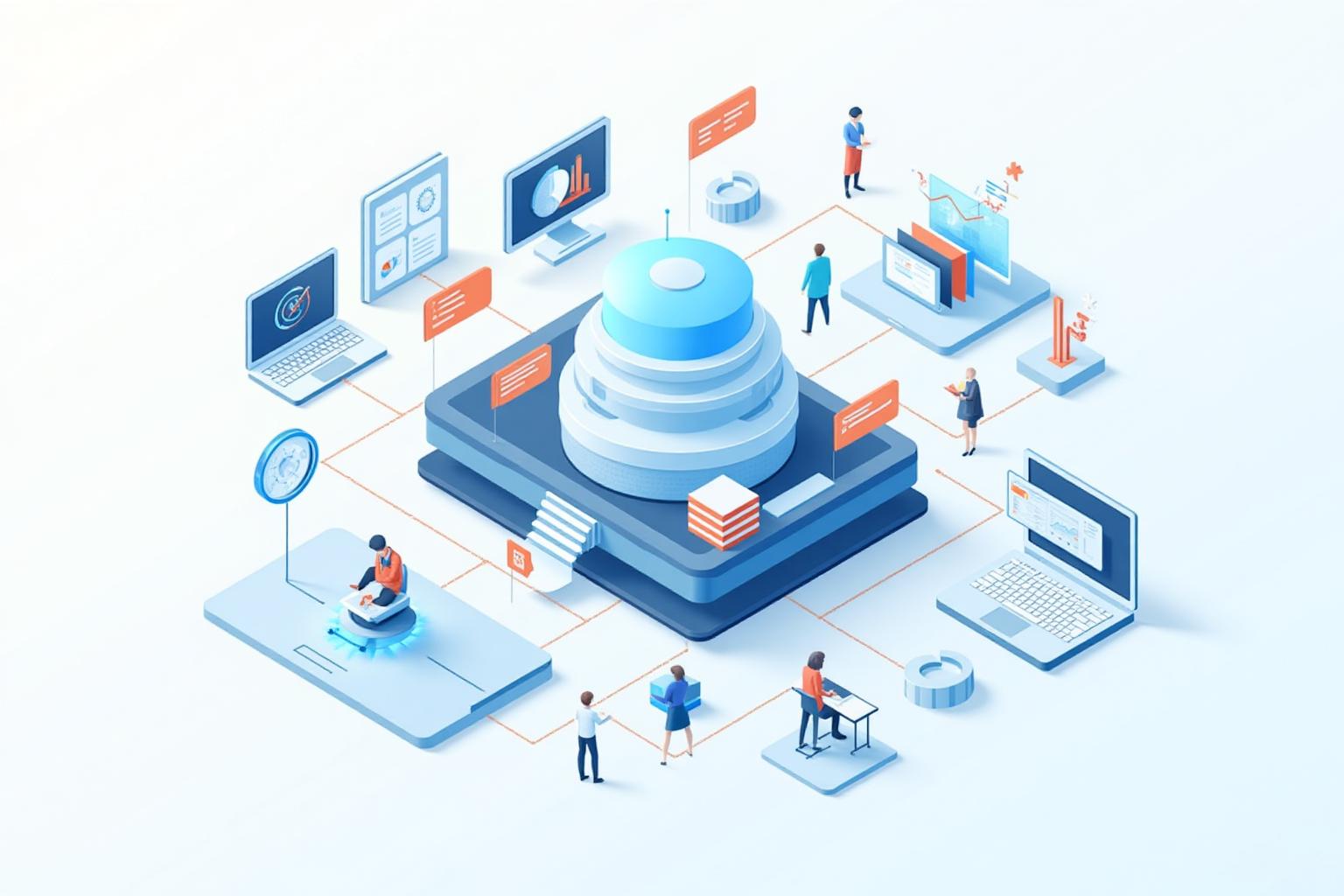
A marketing engine is more than a series of tools. It is a coordinated structure designed to integrate marketing technology, customer data, marketing automation tools, and reporting into a single platform. This helps ensure every action contributes to long-term business objectives and aligns with broader business goals. With clear processes supported by advanced features, SMEs can move beyond sporadic visibility and into a more stable, measurable growth model.
The Six Layers of the Marketing Engine Stack
CRM (Customer Relationship Management):Your CRM sits at the heart of the marketing engine. It stores customer data, tracks each stage of the customer lifetime, and supports customer relationship management activities. By connecting the CRM with marketing automation, social media and landing pages, SMEs gain clearer visibility across their marketing funnel and uncover optimisation opportunities that directly influence growth.
Website Platform: A modern SME website is not just digital signage. It should act as a conversion engine supported by a strong brand identity, dynamic content, and compelling subject lines in email opt-ins. By collecting first-party data through integrated forms, businesses can tailor personalised emails, segment audiences and strengthen marketing campaigns with more precise targeting.
Content Engine:A strong content engine ensures that relevant content is produced consistently. This helps attract specific demographics and encourages customers to remain engaged. Quality content also improves search visibility and lays a foundation for lead nurturing, which is key when marketing teams want to improve conversion rates without increasing budget constraints.
Demand Generation Tools:Traffic channels only succeed when properly integrated. Paid activity, social media, and organic search all contribute to funnel growth, but only when the data feeds back into the CRM. When businesses manage these channels cohesively, they reduce inefficiencies and maintain a steady stream of interest from new customers.
Marketing Automation:Marketing automation automates repetitive tasks such as basic follow-up sequences, simple lead scoring, and email marketing workflows. It ensures customer behaviour triggers the right message at the right time. By embracing marketing automation software, SMEs reduce manual effort and focus on higher-value marketing strategies.
Analytics and Intelligence:Strong analytics convert raw data into meaningful insight. When dashboards highlight key performance indicators and provide insights into campaign success, SMEs are better positioned to identify gaps, adjust marketing efforts and ensure they remain on the same page across small teams. This strengthens decision-making and improves long-term results.
Building Predictable Lead Flow
Turning Activity Into a Connected Engine
Predictability requires alignment. When every system, tool and channel communicates with the CRM, marketing operations become smoother, and customer information becomes more actionable. This enables stronger lead nurturing, clearer pipelines, and more robust marketing efforts.
Predictable lead flow means:
Customer experience becomes more consistent
Email marketing and personalised emails feel tailored
Landing pages convert more effectively
Tools operate together instead of as multiple platforms
The marketing engine produces stable outcomes instead of sharp peaks and troughs
What Predictability Looks Like
A marketing engine isn’t just efficient - it’s measurable. Pipeline growth becomes traceable, cost-per-lead stabilises, and decisions shift from reactive to strategic.
How to Implement the Marketing Engine Stack
Building a marketing engine is less about software and more about sequence. A clear, step-by-step process ensures that technology supports strategy - not the other way round.
Step 1: Define Your Growth Model
Clarify how your business creates value and how marketing supports that model. Businesses should assess their business objectives and business goals by mapping the customer journey and determining which marketing activities support each stage. This creates clarity around where repetitive tasks occur and which automation tools can streamline workflows.
Step 2: Audit Existing Tools
List all tools, from tech stack essentials to free-tier platforms. Identify where customer data lives and where marketing strategies rely on manual intervention. Eliminating unnecessary tools reduces confusion and strengthens core marketing operations.
Step 3: Choose a Scalable CRM
Select a CRM system that integrates with marketing automation platforms, email campaigns and social media. Scalability matters more than complexity, especially for small businesses handling limited resources.
Step 4: Rebuild the Website as a Conversion Asset
Your website should gather first-party data and connect directly to your CRM. Landing pages should be built around clear messaging, targeted relevance and friction-free conversion experiences.
Step 5: Automate Repetitive Processes
Whether automating support tickets, lead scoring or simple email marketing sequences, automation enables small teams to focus on activities that genuinely drive improvement. This also helps maintain customer satisfaction at scale.
Step 6: Integrate Analytics for Continuous Improvement
Analytics tools should track customer behaviour, marketing channel performance and campaign outcomes. This enables businesses to identify optimisation opportunities and refine marketing strategies without guessing.
System First, Tools Second
Technology only delivers value when it’s aligned to a system. The right stack is the one that makes your marketing measurable, not more complicated.
Common Pitfalls to Avoid
Buying Tools Without a System
Tools alone cannot build a marketing engine. Without a strategy, a tech stack becomes messy and ineffective.
Neglecting Training
Even the best systems fall short if teams do not know how to use them. Training is essential for smooth marketing operations.
Poor Data Hygiene
Untidy data leads to weak reporting and unclear decision-making. Clean customer data supports better marketing strategies.
Over-Automation
Automation should enhance experience, not replace authentic engagement.
By addressing these pitfalls early, SMEs can avoid costly rebuilds and achieve measurable results faster.
Book a Growth Engine Strategy Session
Discover how GTi’s Business Growth Engine helps SMEs design, implement, and optimise their Marketing Engine Stack for predictable growth.
Connecting Strategy and Execution
Technology is only half the equation. The other half is clarity - knowing exactly how each component of the stack supports your business objectives. When strategy and systems align, SMEs gain both scalability and control.
As we often remind clients: growth strategy without systemisation leads to inconsistency; technology without strategy leads to confusion. The marketing engine unites both.
Further Reading
Frequently Asked Questions
How do I know which marketing systems my business needs?
Start with your goals. Identify which parts of your customer journey lack visibility or control. From there, select tools that close those gaps and connect with your CRM.
What is the difference between a marketing engine and a marketing funnel?
A funnel represents the customer journey stages; an engine is the system that drives those stages - combining data, content, automation, and analytics to sustain predictable growth.
Do I need technical skills to use the Business Growth Engine?
No. The system is designed for clarity, not complexity. GTi Business Systems provides frameworks, templates, and implementation guidance so your team can run it confidently. Book a free strategy session to see how AI-powered marketing systems can supercharge your business growth.