Most SMEs don’t have a CRM problem. They have a truth problem.
The data that should power growth is scattered across inboxes, spreadsheets, proposal tools, finance software, WhatsApp threads, and “temporary” lists that never go away. Contacts exist in multiple places. Deals are tracked differently by each team member. Marketing reports one set of numbers, sales reports another, and leadership makes decisions based on a blend of gut feel and partial visibility.
This is why growth feels unpredictable even when the business is busy. The business is not short of activity - it is short of alignment, consistency, and trustworthy information.
💡 Key Insight: A CRM only becomes valuable when it is trusted as the single source of truth. If people keep their own versions of reality, the CRM becomes optional - and optional systems never produce predictable growth.
This guide shows you how to build a CRM that becomes the central system for predictable demand, conversion, and retention. Not a glorified address book. Not a piece of software your team resents. A reliable operating system for revenue.
We’ll cover the exact components an SME CRM needs to function as a single source of truth: contact architecture, pipeline design, segmentation, automation, reporting, governance, and the habits that make adoption stick. We’ll also connect it to the Business Growth Engine, where the CRM is the core system powering predictable marketing and sales execution.
Table of contents
What “single source of truth” actually means
A single source of truth does not mean every tool disappears. It means there is one authoritative system where customer and pipeline reality lives, and every other system either feeds it or pulls from it.
When your CRM is the single source of truth:
There is one agreed version of pipeline status and value
There is one agreed definition of stages and outcomes
Lead source and attribution are captured consistently
Follow-up and next actions are visible, not hidden in heads
Reporting is trusted without manual reconciliation
Decisions are made from shared visibility, not debate
📖 Definition: A CRM single source of truth is a system where customer records, deal stages, lifecycle status, activity history, and performance metrics are maintained consistently and used as the basis for decisions across marketing, sales, and leadership.
This matters because predictable growth depends on predictable execution. Predictable execution depends on clarity: who owns what, what happens next, and how performance is measured. The CRM is where that clarity becomes operational.
Why most SME CRMs fail (even with good software)
Most CRM projects fail for one of three reasons: the CRM is not designed around real workflows, the CRM is not enforced through automation and habits, or the CRM is not owned.
Here are the most common failure patterns in SMEs:
1) The CRM is treated as admin
If the CRM is something people update “when they have time”, it will never be accurate. If it’s inaccurate, it won’t be trusted. If it isn’t trusted, it won’t be used. That loop kills adoption.
2) The team has multiple versions of pipeline
One person uses a spreadsheet. Another uses notes. Another tracks “hot deals” in their inbox. Leadership gets a different answer depending on who you ask.
3) Stages are vague and subjective
If stages are defined by activity (“proposal sent”) rather than progress (“proposal reviewed with buyer”), forecasting becomes guesswork.
4) Automation is bolted on without a process
Automation amplifies what already exists. If your process is unclear, automation increases confusion. If your process is clear, automation makes it consistent.
5) Reporting is built for vanity, not decisions
Dashboards show lots of numbers, but don’t answer leadership questions like “where is pipeline leaking?” or “what is most likely to close?”
⚠️ Warning: If your CRM relies on people remembering to update it, it will never become a single source of truth. Systems must reduce reliance on memory and motivation.
A strong CRM does not depend on perfect discipline. It depends on good design, enforced standards, and automation that makes the right behaviour the easiest behaviour.
The CRM’s role inside the Business Growth Engine
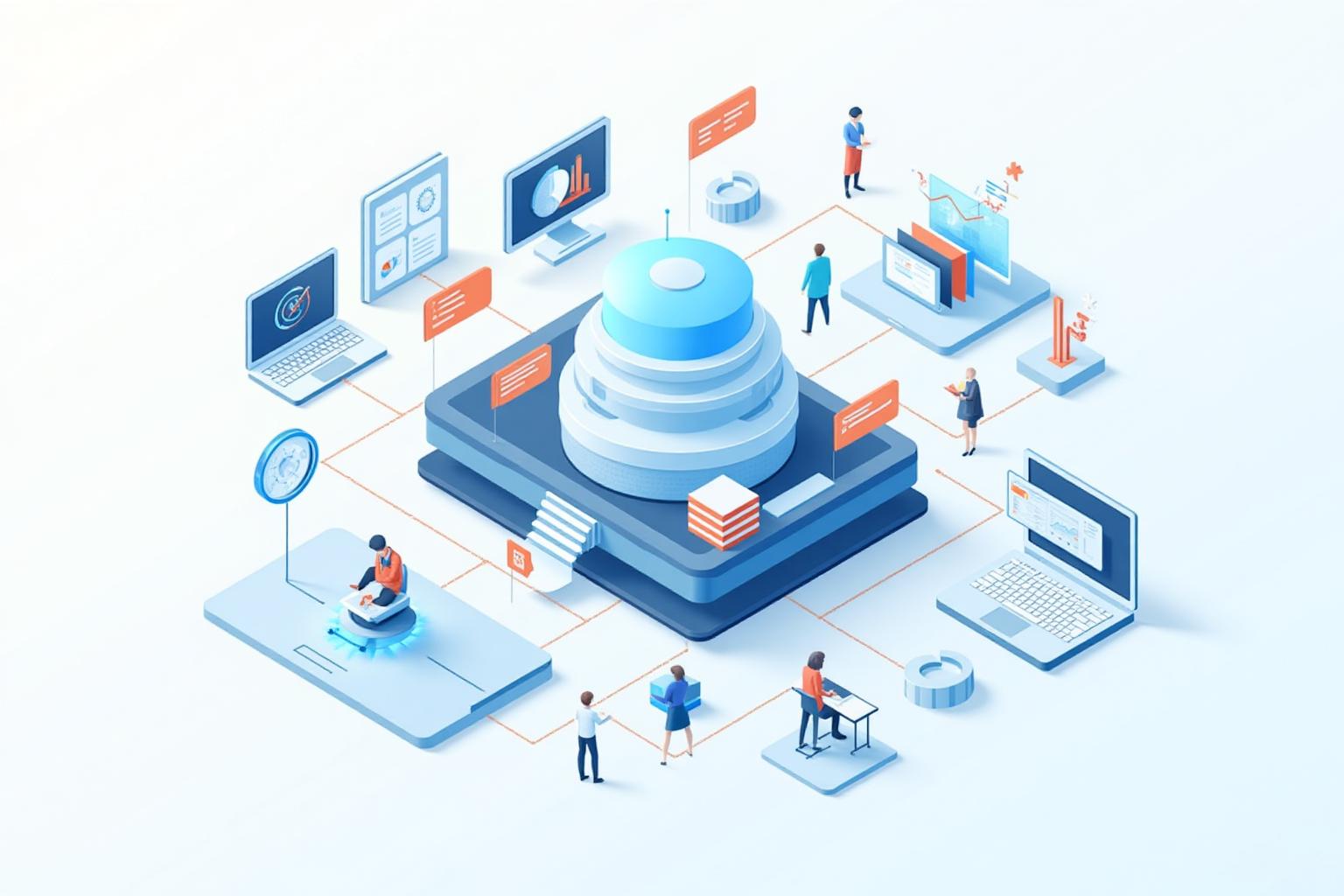
In GTi’s Business Growth Engine, the CRM is the central nervous system. It connects marketing inputs (leads, enquiries, web forms, calls, ads, referrals) to sales execution (follow-up, qualification, pipeline progression) and customer value (onboarding, retention, reactivation, reviews).
If you want predictable demand, you need a system that can:
Capture every enquiry without leaks
Respond consistently and quickly
Track progression through clear stages
Measure conversion and velocity
Create follow-up sequences that prevent drop-off
Turn customer satisfaction into referrals and reviews
The CRM is where those capabilities live. Without a CRM as a single source of truth, you can still grow - but growth will be messy, founder-dependent, and hard to repeat.
📋 How the CRM powers predictable growth
Demand capture: Every lead enters one system with source and context
Conversion execution: Follow-up is automated, tracked, and measured
Visibility: Pipeline health and bottlenecks are visible weekly
Improvement loops: Data reveals what to fix, automate, and optimise next
The 8 pillars of a single source of truth CRM
Every CRM that functions as a single source of truth has the same foundations. Tools differ. Interfaces differ. But the pillars are consistent.
Ownership and governance: someone owns standards, changes, and hygiene
Contact and company data model: clean, consistent, and deduplicated
Lifecycle stages: a shared language for where someone is in the journey
Pipeline design: stages with entry and exit criteria, not vague labels
Segmentation: labels that trigger action, not clutter
Automation: follow-up and consistency baked into the system
Reporting: dashboards that answer leadership questions
Habits: weekly rhythms that keep data accurate and useful
Let’s build these step-by-step.
How to build your CRM data model
A CRM data model is simply the structure of information your business relies on. Most SMEs skip this and jump straight into pipeline stages or automations. That creates messy data and inconsistent reporting later.
Start with the basics: what objects exist in your CRM, and how they relate. Most SMEs need:
Contacts: individual people (leads, customers, partners)
Companies / accounts: the organisation a contact belongs to
Deals / opportunities: revenue opportunities tracked through a pipeline
Activities: calls, emails, meetings, tasks, notes
Tags / custom fields: segmentation and tracking attributes
Step 1: define your “must-have” fields
You do not need hundreds of fields. You need a small set that supports execution and reporting.
A strong SME baseline usually includes:
Contact: first name, last name, email, mobile, role, decision-maker flag
Company: company name, sector, size band, location, service fit flag
Acquisition: lead source, lead channel, campaign, first touch date
Lifecycle: lifecycle stage, last activity date, next action date
Consent: marketing consent, communication preferences (as required)
💡 Tip: If a field is not used for action or reporting, it is noise. Noise reduces adoption. Keep fields minimal and meaningful.
Step 2: deduplication and data hygiene rules
Duplicates destroy truth. They inflate pipeline, split activity history, and create embarrassing customer experiences (multiple emails to the same person, different owners calling the same lead).
Establish rules:
Define what makes a record unique (email, mobile, or both)
Decide what happens when duplicates appear (merge, archive, review queue)
Set a weekly hygiene routine (owner, schedule, checklist)
This is not glamorous work. It is foundational work. Single source of truth starts with clean inputs.
Step 3: lifecycle stages (not the same as pipeline stages)
Lifecycle stages describe a person’s relationship to your business. Pipeline stages describe a deal’s progress. SMEs often confuse them, which creates messy reporting.
A simple lifecycle model might include:
Subscriber: opted in but not qualified
Lead: inbound enquiry or outbound prospect
Marketing Qualified Lead (MQL): meets basic criteria
Sales Qualified Lead (SQL): ready for sales conversation
Opportunity: active deal exists
Customer: active paying customer
Inactive / lapsed: no longer active
Lifecycle stages help marketing and sales coordinate. They also power automation: nurture content for subscribers, follow-up sequences for leads, onboarding for customers, and reactivation for lapsed accounts.
How to design pipelines that reflect reality
Pipelines fail when they are subjective. If stages are vague, two people will place the same deal in different stages. That makes forecasting unreliable and destroys trust in reporting.
A single source of truth pipeline must be:
Defined: every stage has entry and exit criteria
Observable: based on customer behaviour, not internal hope
Owned: clear responsibility for moving deals forward
Measured: conversion and velocity tracked by stage
📝 Example: “Proposal sent” is activity. “Proposal reviewed with decision-maker” is progress. Activity stages inflate pipeline. Progress stages improve forecasting.
A practical SME pipeline template
Your pipeline will vary by business model, but most SMEs can start with a version of this:
New lead: enquiry received and captured
Contacted: first contact made (two-way, not just attempted)
Qualified: fit confirmed and next step agreed
Discovery booked: meeting scheduled
Discovery completed: needs understood, decision process clarified
Proposal presented: proposal walked through live
Negotiation: terms being finalised
Closed won: agreement confirmed
Closed lost: no deal, reason captured
Two principles make this work:
Stages are customer-validated: they reflect what the buyer has done or agreed
Next actions are visible: every deal must have a next step and date
The “stalled deal” rule
Every single source of truth CRM needs a stalled rule. Deals that sit too long distort pipeline and create false confidence.
Set a rule: if a deal has no activity for X days (your sales cycle dictates X), it moves to “stalled” or triggers an automated sequence: reminders, prompts, re-engagement, and eventually closure with a reason.
⚡ Important: If your pipeline includes deals that are not actively progressing, your forecast is fiction. Build the “stalled” mechanism early.
Segmentation that drives action, not admin
Segmentation is one of the most misunderstood parts of CRM design. Many SMEs tag everything and end up with a messy pile of labels that no one uses. Others segment too little and can’t personalise follow-up.
The rule is simple: segmentation must trigger a different action.
High-leverage segments typically include:
Lead source: Google Ads, referral, organic search, events, outbound
Service fit: high fit, medium fit, low fit
Urgency: urgent, planned, exploratory
Industry / niche: only if it changes messaging or offer approach
Lifecycle: subscriber, lead, opportunity, customer, lapsed
Customer tier: if you serve customers differently by tier
Segmentation should make it easier to answer questions like:
Which lead sources convert and produce margin?
Where are we losing leads and why?
Which segment should receive which follow-up sequence?
Which customer type is most likely to renew or buy again?
❌ Common Mistake: Creating dozens of tags that mean nothing operationally. If you can’t explain what action a tag triggers, delete it.
If you want segmentation to stick, keep it simple, automate as much as possible (source tagging, lifecycle updates), and ensure it feeds reporting and follow-up.
Automation that enforces consistency and prevents leaks
Automation is where a CRM becomes a growth system. It is also where many SMEs create mess by automating before defining the process.
Start with a simple principle: automate the bottlenecks that create revenue leaks.
Most SMEs leak revenue in five places:
Slow response to new enquiries
Inconsistent follow-up after first contact
Deals stalling without clear next steps
Poor handoff from sales to delivery
No reactivation of past leads and lapsed customers
Automation 1: lead capture and instant response
Every enquiry should enter the CRM automatically from web forms, call tracking, chat widgets, booking forms, and manual entry if needed. Then the system should respond instantly: acknowledgement, next step, scheduling link, or qualification questions.
This protects speed-to-lead, which is one of the simplest conversion advantages an SME can create.
Automation 2: follow-up sequences that protect conversion
Most deals are lost due to silence, not competition. People get busy. If you do not follow up, someone else will.
Build follow-up sequences tied to lifecycle and pipeline stage:
New lead follow-up (first 7 days)
Discovery reminder and preparation sequence
Post-discovery follow-up and proposal scheduling
Proposal follow-up and objection handling
Stalled deal re-engagement and closure
Automation 3: task prompts and owner accountability
If your CRM expects salespeople to remember tasks, it will fail. Use automation to prompt owners: tasks due, follow-ups required, stage progression reminders, and alerts when deals go cold.
This is how a CRM becomes a single source of truth: it doesn’t just store information - it drives action.
Automation 4: onboarding and customer lifecycle workflows
Most SMEs treat the CRM as pre-sale only. That is a missed opportunity. Your CRM should also manage customer onboarding, success check-ins, review requests, referrals, renewals, and reactivation campaigns.
If you want predictable growth, you must treat retention and repeat purchase as part of the growth engine, not an afterthought.
☑️ High-impact CRM automations for SMEs
Instant response to every new enquiry
Multi-step follow-up for unresponsive leads
Automated reminders for booked meetings
Stage-based nurture sequences (proposal, negotiation)
Stalled deal detection and re-engagement
Sales-to-delivery handoff workflow
Customer onboarding and milestone check-ins
Review request and referral automation
Reactivation campaigns for past leads and lapsed customers
If you want a practical view of automations you should build, explore GTi’s automation approach via /automation.
Reporting dashboards leadership will actually use
The moment your CRM becomes the single source of truth is the moment leadership stops asking for manual reports and starts using dashboards to steer the business.
Your dashboards must answer leadership questions, not just display numbers. The best reporting is decision-focused.
Leadership dashboards typically fall into five groups:
1) Demand and lead flow
Leads by source and channel
Lead to discovery conversion rate
Cost per lead (if paid channels)
Response time and first contact rate
2) Pipeline health
Pipeline value by stage
Deals created vs deals closed
Win rate and average deal value
Stage conversion rates and drop-off points
3) Velocity and forecasting
Average time in stage
Sales cycle length by segment
Forecasted close value vs target
Stalled deals count and value
4) Activity and execution
Follow-up tasks completed on time
Contact attempts and connection rate
Meetings booked and attended
5) Customer value and retention
Repeat purchase rate or renewal rate
Reactivation performance
Review volume and sentiment
📊 Reality Check: Most SME teams review revenue after it happens. A strong CRM lets you review risk before it happens by tracking pipeline health, velocity, and drop-off points in real time.
Keep dashboards simple. If leadership needs a 30-minute explanation to interpret the numbers, the system is not doing its job.
Governance, ownership, and “CRM hygiene”
Single source of truth is as much about governance as it is about technology. Without ownership, a CRM decays. Fields drift. New pipelines appear. Stages multiply. Workarounds creep in. Trust disappears.
Every SME needs a named CRM owner. Not “IT”. Not “everyone”. An accountable system owner.
CRM ownership includes:
Standards: field definitions, stage criteria, tagging rules
Changes: approval for pipeline changes and automation edits
Hygiene: weekly dedupe and data completeness checks
Training: onboarding new team members into the CRM habits
Reporting integrity: ensuring dashboards reflect reality
⚠️ Warning: “Everyone owns the CRM” usually means no one does. Without ownership, your single source of truth becomes a single source of confusion.
The habit that makes CRM adoption stick: weekly pipeline rhythm
If you want your CRM to be trusted, you must use it weekly as part of how the business runs. The simplest habit is a weekly pipeline review where:
Every deal has a next step and date
Stalled deals are identified and re-engaged or closed
Forecast is reviewed against target
Lead source performance is checked
Actions are agreed and assigned
This turns the CRM from “software we should use” into “how we run the business”. That is the difference between adoption and decay.
A practical 90-day implementation roadmap
You do not build a single source of truth CRM in a weekend. You build it by installing structure first, then automating the bottlenecks, then embedding the habits that keep it accurate.
Step 1 (Days 1–30): Build the foundation
Define the data model: contacts, companies, lifecycle, deals
Choose and standardise your must-have fields
Clean existing data and merge duplicates
Define lifecycle stages and rules for updates
Design one pipeline with clear stage criteria
Your target by day 30 is not perfection. It is a CRM structure that can be trusted and used without constant debate.
Step 2 (Days 31–60): Install automation and prevent leaks
Automate lead capture from every source
Implement instant response and follow-up sequences
Add task prompts and owner reminders
Build stalled deal detection and re-engagement
Implement sales-to-delivery handoff workflow
By day 60, the CRM should actively drive behaviour. It should be harder to ignore than to use.
Step 3 (Days 61–90): Embed reporting and habits
Build decision-focused dashboards for leadership
Implement a weekly pipeline and demand review rhythm
Assign CRM ownership and governance rules
Create a monthly hygiene checklist and review cycle
Train the team on “how we use the CRM here”
By day 90, the CRM should feel like the default. When questions arise, the answer should come from the CRM rather than someone’s memory or a spreadsheet.
What success looks like when your CRM becomes the single source of truth
When you get this right, the benefits are practical and immediate. You’ll feel them in the way the business runs:
Lead response becomes consistent and measurable
Follow-up stops depending on memory
Pipeline becomes forecastable because stages are defined
Marketing and sales stop arguing about numbers
Leadership makes decisions earlier, with less guesswork
Revenue leaks become visible and fixable
✅ Success Indicator: When someone asks, “What’s happening with growth?”, the answer comes from the CRM - not from spreadsheets, inboxes, or gut feel.
A CRM single source of truth turns growth from a guessing game into a system. It makes execution visible. It makes improvement measurable. And it creates the foundation for predictable demand when embedded into the Business Growth Engine.
Want help building a CRM that actually works? Book a FREE Strategy Session and we’ll map how your CRM can become the engine for predictable growth. Book a FREE Strategy Session.
Frequently Asked Questions
What is the best CRM for SMEs?
The best CRM is the one your team will actually use as the single source of truth. Features matter less than structure, adoption, automation, and reporting that supports real workflows.
How do CRMs support predictable growth?
A CRM supports predictable growth by capturing every lead, enforcing consistent follow-up, making pipeline health visible, improving forecasting, and creating feedback loops that show where to optimise marketing and sales execution.
What does a single source of truth mean?
It means one trusted system holds customer and pipeline reality, is maintained consistently, and is used as the basis for decisions across marketing, sales, and leadership - without parallel spreadsheets or conflicting versions of the truth.