Why Reputation Is the Most Underused Growth Lever in SMEs
Most SMEs treat reputation as something you “have” rather than something you build.
You might get a few reviews here and there. You might share a testimonial when a customer says something nice. You might ask for feedback when you remember.
That approach creates reputation drift. You get occasional spikes of proof, followed by long gaps where trust slowly decays.
This matters because buyers do not decide based on your claims. They decide based on signals: reviews, consistency, credibility, and how visible that proof is when they are ready to buy.
💡 Key Insight: Reputation is not a by-product of doing good work. It is a system. When you systemise it, trust compounds and conversion improves without increasing ad spend.
This article introduces the Reputation Flywheel - a structured system for capturing reviews, distributing social proof, amplifying credibility, and improving conversion. It also shows how the Reputation Booster inside the Business Growth Engine turns reputation into a compounding asset that drives long-term market leadership.
What a Reputation Flywheel Actually Means
A flywheel is a system where effort creates momentum, and momentum reduces the effort required to keep moving.
In reputation terms: each review, testimonial, and proof asset makes the next sale easier - which makes the next review easier - which increases trust - which improves conversion - which creates more customers and more proof.
📖 Definition: A reputation flywheel is a repeatable system that captures customer proof, distributes it where buyers make decisions, and compounds trust over time.
Most SMEs never build this. They collect reviews, but they do not operationalise them. So proof exists, but it does not compound.
The SME Reputation Flywheel
The flywheel has four stages. Miss one stage and the system stalls.
📋 The Reputation Flywheel System
1) Capture - generate reviews and testimonials consistently, not occasionally.
2) Distribute - place social proof where buyers decide (GBP, website, landing pages, proposals, follow-ups).
3) Amplify - turn proof into assets across channels (message marketing, retargeting, content, sales enablement).
4) Convert - use trust to increase conversion rates and reduce sales friction.
If you want to move from “good reputation” to “market leader”, you build this flywheel until trust becomes the default.
Stage 1: Capture - The Review Generation System
The first stage is simple: generate reviews consistently.
But most SMEs do it in a way that guarantees inconsistency:
They ask only when they remember.
They ask only their happiest customers.
They delay the request until weeks after delivery.
They rely on one person to “keep on top of it”.
❌ Common Mistake: Treating review requests as a personal task. If your review system depends on memory, it will fail under pressure.
What Makes Reviews Predictable
A review generation system has three characteristics:
Timing: it triggers immediately after delivery while satisfaction is high.
Automation: it runs without the owner chasing it weekly.
Consistency: it is applied to every suitable customer, not the “best ones”.
💡 Pro Tip: The easiest review to get is the one requested within 24–48 hours of a successful delivery. Delay kills response rate.
Stage 2: Distribute - Put Proof Where Decisions Happen
A review is only valuable if it shows up when a buyer is deciding.
For most SMEs, those decision points are predictable:
Google Business Profile and map pack comparisons
Your website homepage, service pages, and local pages
Landing pages used in paid traffic or outbound
Proposal documents and follow-up emails
Nurture sequences and reactivation campaigns
⚡ Important: You do not need more testimonials. You need your best proof placed in the highest-leverage conversion moments.
If your team manually copies and pastes proof occasionally, distribution will always be inconsistent. Systemised distribution means proof is routinely pulled into the places it needs to live - and kept current as new reviews arrive.
Stage 3: Amplify - Turn Reviews Into Social Proof Assets
This is where SMEs leave money on the table.
A single review can become:
A website proof tile
A sales follow-up message
A social post
A retargeting creative
A credibility sequence inside message marketing
📝 Example: A customer review mentioning a specific outcome (“fast response”, “sorted in 24 hours”, “saved us money”) becomes a short proof-led email, a GBP Post, and a sales follow-up template - all reinforcing the same trust message.
Amplification is what turns reputation from a passive signal into an active growth engine.
Want the Reputation Flywheel installed and automated? The Business Growth Engine includes the Reputation Booster plus automations and distribution workflows that compound trust. Book a FREE Strategy Session →
Stage 4: Convert - Use Trust to Increase Conversion Rates
Reputation becomes a growth lever when it changes conversion behaviour.
Strong proof reduces friction across the full buyer journey:
More clicks from search results due to strong review signals
Higher landing page conversion
Fewer “are you legit?” questions on calls
Shorter sales cycles
Higher close rates
When trust is high, buyers move faster and hesitate less.
✅ Success Indicator: You know the flywheel is working when prospects reference your reviews unprompted and conversations start deeper in the journey.
Why Reputation Compounds Into Market Leadership
Market leaders are not always the best at delivery. They are usually the best at being trusted.
If a competitor has more reviews, more recent reviews, proof distributed everywhere, and social proof embedded in every follow-up, they will often win buyers even if your service is better.
⚠️ Warning: If you do not systemise reputation, you are leaving trust - and therefore conversion - to chance. Competitors who operationalise proof will pull ahead quietly.
Why Most SME Reputation Efforts Stall After “Getting Reviews”
Many SMEs believe they have a reputation strategy because they have reviews.
They might even have a strong average rating. But reputation does not stall because reviews are missing. It stalls because reviews are not operationalised.
In stalled reputation systems, reviews sit on one platform, disconnected from sales conversations, follow-up sequences, ads, and decision points. Trust is present but passive. It reassures buyers who happen to look for it, but it does not actively accelerate decisions.
💡 Key Insight: Reputation only becomes a growth lever when it is deliberately pulled into the moments that determine conversion.
Passive reputation reassures. Active reputation persuades.
Reputation vs Brand: A Critical SME Distinction
SMEs often confuse reputation with brand.
Brand is what you say about yourself. Reputation is what others say about you when you are not in the room.
For large enterprises, brand campaigns can dominate perception. For SMEs, reputation almost always outweighs brand. Buyers do not trust polish. They trust proof.
⚡ Important: If your growth relies on trust, credibility, and word-of-mouth, reputation is not a marketing channel. It is core infrastructure.
How the Reputation Flywheel Reduces Marketing Dependence
One of the most overlooked benefits of a strong reputation flywheel is cost reduction.
As trust compounds, dependency on paid traffic, discounting, and persuasion-heavy selling decreases.
This shows up as:
Higher click-through rates from search results
Better landing page conversion due to visible proof
Shorter sales cycles because objections are pre-handled
Higher referral rates because proof is reinforced publicly
✅ Success Indicator: When reputation is working, marketing spend becomes optional acceleration rather than mandatory survival.
Reputation as a Sales Enablement System
Most SMEs think of reputation as a marketing concern. In reality, its highest leverage often appears inside sales.
When sales teams are equipped with structured proof, conversations change. Instead of defending price or credibility, sales discussions move faster into outcomes, fit, and next steps.
Where Reputation Should Show Up in Sales
Pre-call confirmation emails with relevant proof
Proposals with contextual testimonials
Post-call follow-ups reinforcing the specific concern raised
Re-engagement messages for stalled opportunities
📝 Example: If a prospect hesitates on reliability, the follow-up does not restate features. It includes a short review referencing reliability, speed, or consistency - pulled from your proof library.
The Compounding Advantage: Why Late Movers Lose Ground
Reputation flywheels create asymmetry. The business that starts earlier does not just have more reviews. It has more momentum.
Each additional review makes future growth easier. Each month of inactivity makes catching up harder. This is why reputation leadership often looks “sudden” from the outside. In reality, it is the result of quiet compounding.
⚠️ Warning: Waiting until competitors dominate reviews usually means paying more later to close a trust gap that could have been built gradually.
Reputation Signals Buyers Trust (Even When They Don’t Say It)
Buyers rarely announce that reputation influenced their decision. Instead, it shows up indirectly:
They contact you already convinced
They reference “what others said” without naming it
They compare you less aggressively on price
They move faster once they engage
These are downstream effects of trust being established before the conversation begins.
Reputation as Risk Management, Not Just Growth
Most SMEs think about reputation only in terms of upside. But reputation also plays a defensive role - and for many businesses, this is where its true value emerges.
A strong Reputation Flywheel protects against:
Price undercutting by competitors
Negative perception from isolated bad experiences
New entrants with aggressive marketing but no proof
Economic slowdowns where buyers become cautious
⚡ Important: In uncertain markets, buyers default to the safest choice. Reputation determines who that is.
Why Reputation Should Be Owned at Leadership Level
Reputation systems often fail because ownership is unclear.
Marketing assumes sales will ask. Sales assumes marketing will use them. Leadership assumes “someone is on it”. The result is drift.
What Ownership Looks Like in Practice
One accountable owner (not five contributors)
Clear monthly targets (not vague “more reviews”)
Defined integration points with sales and marketing
Visibility in leadership meetings
Market leaders treat reputation the same way they treat cash flow or pipeline health: owned, measured, reviewed.
The Reputation Review Cadence That Prevents Drift
Reputation drift happens quietly. Nothing breaks. Reviews still come in. Ratings stay acceptable. But momentum slows.
📋 Reputation Review Cadence
Weekly: review new feedback and respond publicly where appropriate
Monthly: review velocity, sentiment themes, and distribution usage
Quarterly: assess conversion impact and competitive positioning
Measuring the Reputation Flywheel (Beyond Star Ratings)
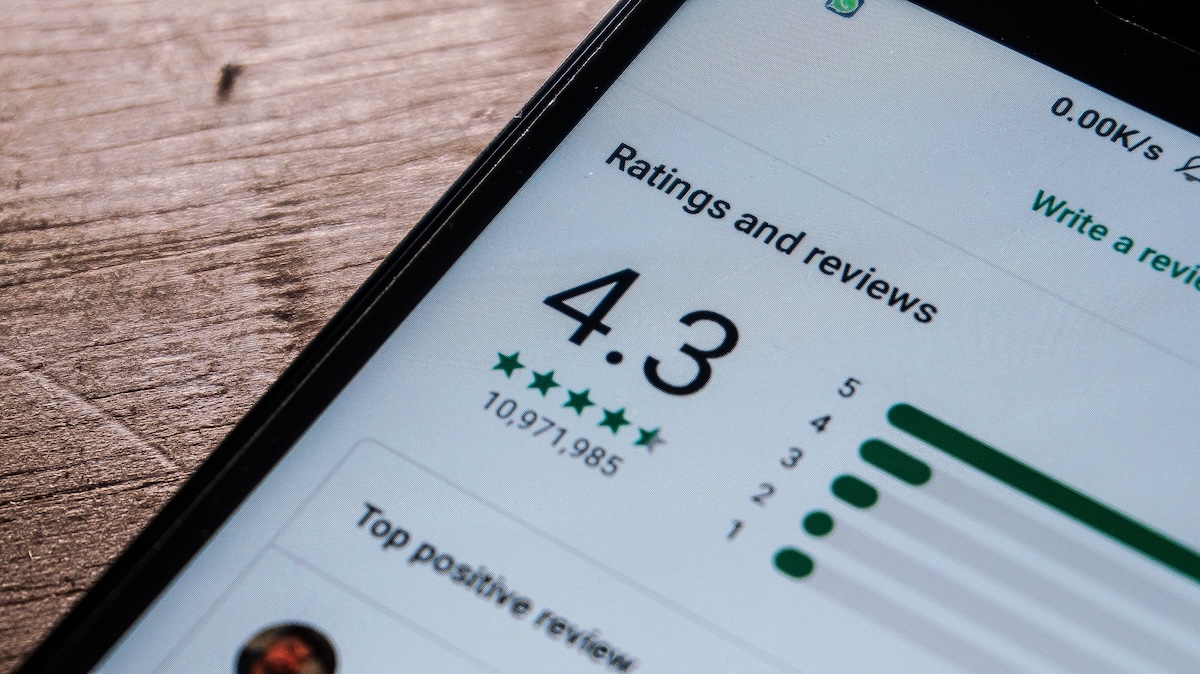
Star rating is a hygiene metric. It tells you if something is broken. It does not tell you if the flywheel is accelerating.
Metrics That Indicate Compounding Trust
Review velocity (reviews per month)
Recency (time since last review)
Specificity (outcome-led detail vs generic praise)
Proof usage (where testimonials are deployed across the journey)
Sales friction trend (fewer repeated objections over time)
💡 Key Insight: When reputation is compounding, sales friction reduces before lead volume increases.
Common Failure Modes in Reputation Flywheels
Failure Mode 1: Over-Automation Without Oversight
Automation enables scale, but unchecked automation creates tone-deaf responses and missed signals. Reputation still requires human judgement, especially with nuanced feedback.
Failure Mode 2: Chasing Volume at the Expense of Meaning
Not all reviews are equal. Ten generic “great service” reviews do less than two reviews that describe a specific outcome.
⚠️ Warning: Optimising only for volume can weaken credibility. Buyers trust specificity more than stars.
Failure Mode 3: Proof That Never Evolves
If testimonials from years ago still dominate your website, your reputation looks frozen. Fresh proof signals active relevance.
The Long-Term Advantage: Reputation Over 3–5 Years
The Reputation Flywheel reveals its full power over time.
In the first 90 days, you see momentum. In the first year, you see stability. By year three, you see asymmetry.
Competitors must spend more on ads to achieve similar conversion, discount more aggressively to overcome trust gaps, and explain themselves more often in sales conversations.
✅ Long-Term Outcome: Reputation becomes a moat. Growth becomes easier, not harder, as the business scales.
Reputation and Valuation: The Overlooked Link
For owner-managed SMEs, reputation can also influence valuation and optionality.
Buyers and investors look for transferable trust. A business where demand depends on the founder’s personal relationships is riskier than a business with consistent public proof and visible authority.
⚡ Important: Transferable reputation increases optionality - whether you plan to exit or not.
The 30-Day Reputation Flywheel Launch Plan
You do not need a year to start compounding trust. You need a structured launch.
☑️ 30-Day Flywheel Checklist
Week 1: define your review request trigger (delivery complete, job closed, onboarding complete).
Week 1: write a short review request message and choose your primary review platform.
Week 2: automate review requests and add a follow-up reminder.
Week 2: build a proof library (best reviews tagged by theme: speed, reliability, service, outcome).
Week 3: deploy proof blocks on your most visited pages and your highest-intent landing pages.
Week 3: create proof-led sales follow-up templates matched to common objections.
Week 4: start amplification via message marketing and simple proof-led content.
This is enough to move from sporadic reviews to a system that builds momentum.
FAQs
How do SMEs build reputation quickly?
SMEs build reputation quickly by installing a repeatable review generation system, requesting reviews immediately after delivery, and distributing proof across the buyer journey instead of leaving reviews on one platform.
Why are reviews important?
Reviews influence both visibility and conversion. They increase trust, reduce hesitation, improve click-through rates, and help buyers choose you faster - especially in local and regional markets.
What is a reputation flywheel?
A reputation flywheel is a system that captures reviews, distributes social proof where buyers decide, amplifies credibility through marketing and sales assets, and improves conversion - creating compounding momentum over time.
Ready to Turn Reputation Into a Compounding Growth Engine?
If you rely on trust to win deals - and most SMEs do - reputation should not be a passive by-product. It should be engineered.
When you install the flywheel, trust becomes visible, measurable, and repeatable. That is how you move from “one of many options” to “the obvious choice”.
Book a FREE Strategy Session to map your Reputation Flywheel, identify the highest-leverage proof gaps, and install a system that compounds trust. Book your session →
Or explore the system components: Reputation Booster, Message Marketing, and the Business Growth Engine.