Most SMEs don’t have a traffic problem.
They have a conversion problem disguised as a marketing one.
Founders invest in websites, ads, SEO, social media, agencies, tools, and platforms, yet results remain inconsistent. Some campaigns work. Others fall flat. Lead quality fluctuates. Sales conversations drag. Revenue spikes and dips with no clear explanation.
When we audit these businesses, the pattern is almost always the same: plenty of activity, reasonable visibility, but a weak or unclear offer.
Not a bad product. Not a bad service. A badly engineered offer.
💡 Key Insight: Traffic amplifies whatever offer you put in front of it. If the offer is weak, more traffic simply accelerates failure.
This article breaks down the GTi Offer Engine - a practical, repeatable system SMEs use to design offers that convert attention into action, and action into predictable revenue.
This is not about copywriting tricks or hype. It is about engineering offers that make sense to buy.
Why Most SME Offers Fail (Even with Good Marketing)
Most SME offers are built inside-out.
The business starts with what it sells, bundles some features together, applies a price, and pushes it into the market. The hope is that strong marketing will do the rest.
But buyers do not evaluate offers the way businesses design them.
Customers are asking:
What problem does this actually solve for me?
Why should I believe it will work?
What happens if it doesn’t?
Why should I act now rather than later?
If your offer does not answer those questions clearly and quickly, conversion suffers - regardless of channel.
❌ Common Mistake: Confusing the product with the offer. Your service may be excellent, but if the offer lacks clarity, structure, and risk reduction, prospects hesitate.
This is why two businesses selling near-identical services can see wildly different results from the same traffic sources.
One has an engineered offer. The other has a price list.
The Offer Engine vs Product-Market Fit
Many founders believe they are still “searching for product-market fit”. In reality, they have product-market fit, but no offer-market fit.
Their service works. Clients get results. Referrals exist. Retention is reasonable.
What is missing is a repeatable way to package that value into a compelling buying decision.
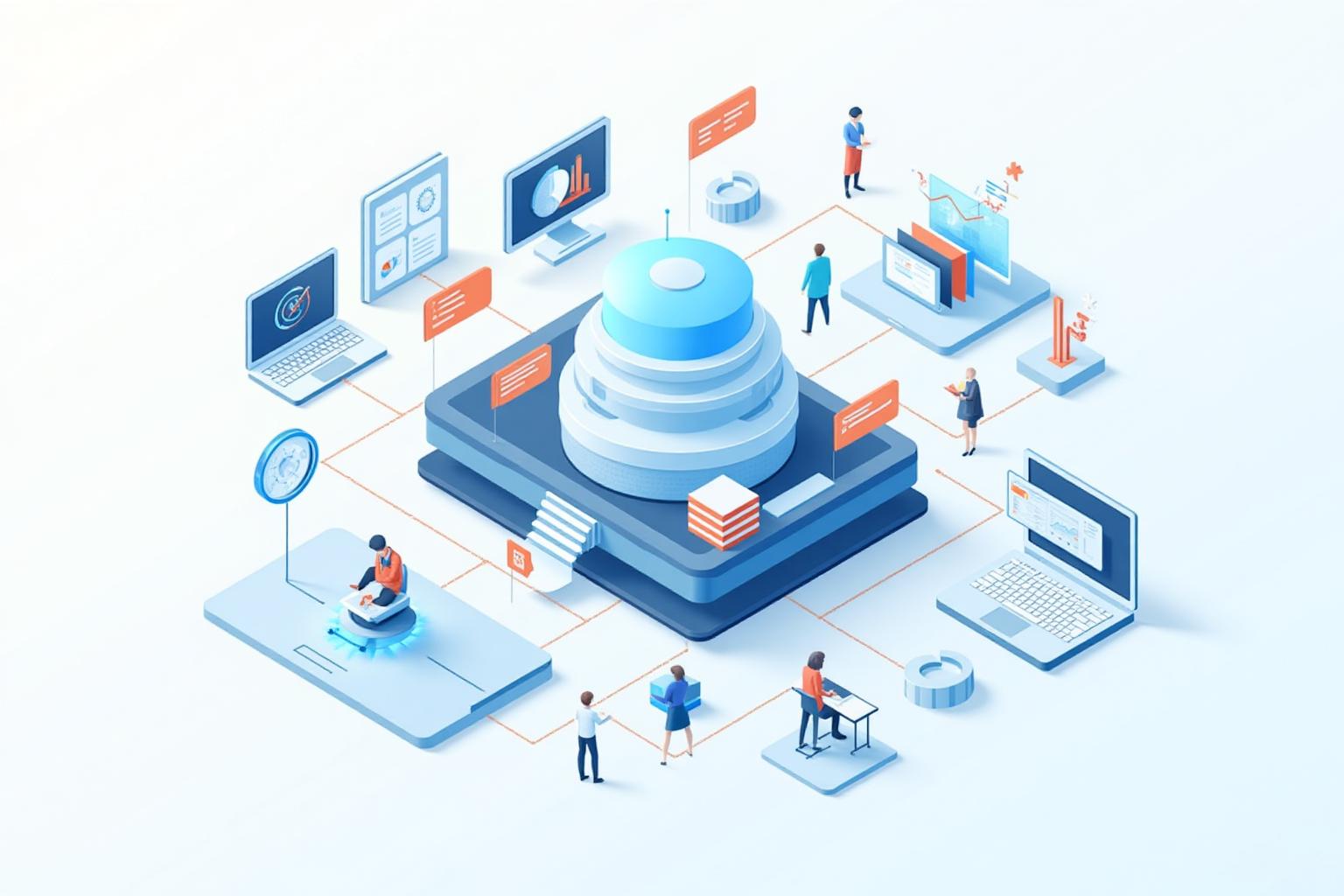
The Offer Engine sits between your product and your campaigns. It translates capability into conversion.
At GTi, we treat offers as systems, not creative experiments. When offers are engineered properly, they can be deployed consistently across:
Email campaigns
PPC ads
Landing pages
Sales conversations
Outbound messaging
That consistency is what turns growth from accidental into predictable.
The GTi Offer Engine Framework
The GTi Offer Engine is a seven-part system designed to trigger both emotional desire and logical justification - the two forces behind every buying decision.
📋 The GTi Offer Engine Framework
1. Outcome Clarity – One clear, specific result
2. Problem Framing – Why the status quo is costly
3. Value Stack – Tangible and intangible value
4. Proof & Authority – Evidence and credibility
5. Risk Reversal – Removing fear from the decision
6. Urgency & Scarcity – A real reason to act now
7. Pricing & Sequencing – Context that makes price logical
Let’s break each element down in practical SME terms.
1. Outcome Clarity: One Offer, One Win
High-converting offers promise a single, clearly defined outcome.
Not “improve your marketing”. Not “grow your business”. Not “optimise performance”.
Specific outcomes reduce cognitive load. The buyer instantly understands what success looks like.
📝 Example: “Generate 30 qualified sales conversations in 30 days” will outperform “lead generation services” every time.
This does not mean your service only delivers one thing. It means your offer leads with one thing.
Clarity increases confidence. Confidence increases conversion.
2. Framing the Cost of Inaction
People rarely act because something is nice to have. They act because staying the same is uncomfortable.
Effective offers frame the problem as something that is already costing the buyer time, money, energy, or opportunity.
For SMEs, this often includes:
Inconsistent lead flow
Founder-dependent sales
Unpredictable months
Over-reliance on referrals
Marketing spend with unclear ROI
Your offer should position itself as the fastest, safest route out of that pain.
3. Building a Compelling Value Stack
Value is not just what you deliver. It is how the buyer perceives the exchange.
High-performing offers stack value across multiple dimensions:
Speed: How quickly results are achieved
Simplicity: How easy it is to implement
Support: How much guidance is provided
Certainty: How predictable the outcome feels
💡 Pro Tip: Most SMEs underuse onboarding, diagnostics, audits, and implementation support as value drivers. These increase perceived value without increasing delivery complexity.
Bonuses, templates, playbooks, and access to expertise all strengthen the value stack when they directly support the promised outcome.
4. Proof and Authority: Making Belief Logical
Scepticism is a rational response to risk.
Proof exists to reduce perceived risk, not to impress.
Effective proof includes:
Specific results (not vague praise)
Before-and-after comparisons
Timeframes
Relevant case examples
Clear experience signals
⚡ Important: Proof must match the promise. Testimonials about “great service” do not support offers promising measurable outcomes.
When proof aligns with the outcome, belief becomes logical rather than emotional.
5. Risk Reversal: Removing the Real Objection
Most objections are not about price.
They are about fear: fear of wasting money, time, credibility, or momentum.
Risk reversal addresses that fear directly.
This can take many forms:
Performance guarantees
Pilot phases
Milestone-based delivery
Opt-out checkpoints
⚠️ Warning: Weak guarantees reduce trust. Strong, specific risk reversal increases conversion by signalling confidence.
Risk reversal shifts the decision from “Should I trust you?” to “Why wouldn’t I try this?”
6. Ethical Urgency and Scarcity
Urgency works when it is real.
False countdowns and manufactured scarcity damage long-term trust and brand equity.
Ethical urgency comes from genuine constraints:
Limited capacity
Campaign windows
Seasonal timing
Opportunity cost
💡 Key Insight: Urgency should answer “why now?”, not create fear of missing out through pressure.
When urgency is honest, it feels helpful rather than pushy.
7. Pricing Psychology and Offer Sequencing
Price is always judged in context.
Anchoring, comparison, and framing help prospects justify decisions logically.
Effective offers rarely exist in isolation. They sit within a sequence:
Entry Offer: Low risk, high value introduction
Core Offer: Primary revenue driver
Ascension Offer: Higher commitment, deeper transformation
📝 Example: A free diagnostic → paid implementation → ongoing optimisation creates momentum and trust.
This sequencing is what allows SMEs to scale campaigns without overwhelming prospects.
Implementing the Offer Engine in Your Business
Engineering an offer is not a one-off exercise. It is a strategic asset.
At GTi, offers are designed inside the Business Growth Engine so they can be deployed, tested, refined, and scaled with data.
☑️ Offer Engine Implementation Checklist
Define one clear campaign outcome
Map buyer pains and cost of inaction
Build a value stack that supports speed and certainty
Align proof with the promised result
Design a genuine risk reversal
Introduce ethical urgency
Sequence offers across campaigns
When this system is installed, conversion stops being mysterious.
What Success Looks Like
Businesses with engineered offers experience:
Higher conversion rates with the same traffic
More confident sales conversations
Shorter sales cycles
More predictable campaign performance
Reduced dependence on founders
Most importantly, growth becomes repeatable.
Frequently Asked Questions
What makes an offer irresistible to customers?
An offer becomes irresistible when it combines a clear outcome, strong proof, reduced risk, and a compelling reason to act now. The goal is to make the decision feel safe, sensible, and timely - not pressured.
Should my business have one core offer or multiple?
Most SMEs perform best with one strong core offer supported by an entry offer (to build trust) and an ascension offer (to increase lifetime value). Too many offers too early usually creates confusion and slows conversion.
How do I add urgency without feeling pushy?
Use genuine constraints: limited capacity, campaign windows, seasonal relevance, or clear opportunity cost. If urgency is real and explained transparently, it feels helpful rather than salesy.
Final Thought: Offers Are Leverage
A strong offer is leverage.
It multiplies the effectiveness of every channel, every campaign, and every conversation.
If your marketing feels noisy, inconsistent, or exhausting, the solution is rarely more activity.
It is a better-engineered offer.
Ready to engineer offers that convert consistently? Book a FREE Strategy Session and we’ll map your Offer Engine and campaign sequencing for predictable growth. Book your session.